Search This Blog

Tuesday, December 4, 2018

Forget #Venezuela, there’s #Guyana now! @ExxonMobil @Hess 5BN Barrels of #Oil @ #Stabroek in 4 years

ExxonMobil Increases Stabroek Resource Estimate to 5 Billion Barrels; Makes 10th Discovery | Seeking Alpha
  • Reinforces potential for at least five floating storage, production and offloading vessels producing more than 750,000 barrels of oil per day by 2025
  • Pluma-1 well represents 10th discovery

ExxonMobil Increases Stabroek Resource Estimate to 5 Billion Barrels; Makes 10th Discovery

  • More than 5 billion recoverable oil-equivalent barrels discovered in less than four years
  • Reinforces potential for at least five floating storage, production and offloading vessels producing more than 750,000 barrels of oil per day by 2025
  • Pluma-1 well represents 10th discovery

IRVING, Texas--(BUSINESS WIRE)-- ExxonMobil said today it made its 10th discovery offshore Guyana and increased its estimate of the discovered recoverable resource for the Stabroek Block to more than 5 billion oil-equivalent barrels.

The resource estimate, up from the previous estimate of more than 4 billion oil-equivalent barrels, is a result of further evaluation of previous discoveries and includes a new discovery at the Pluma-1 well.

"The discovery of a resource base of more than 5 billion oil-equivalent barrels in less than four years is a testament of our technical expertise and rigorous evaluation and pursuit of high-potential, high-risk opportunities in this frontier area," said Neil Chapman, ExxonMobil senior vice president. "We will continue to apply what we've learned to identify additional exploration prospects and potential future discoveries that will deliver significant value to Guyanese people, our partners and shareholders."

The Pluma-1 well encountered approximately 121 feet (37 meters) of high-quality hydrocarbon-bearing sandstone reservoir. Pluma-1 reached a depth of 16,447 feet (5,013 meters) in 3,340 feet (1,018 meters) of water. The Noble Tom Madden drillship began drilling on Nov. 1. The well is located approximately 17 miles (27 kilometers) south of the Turbot-1 well. The Noble Tom Madden will next drill the Tilapia-1 prospect located 3.4 miles (5.5 kilometers) west of the Longtail-1 well.

"Together with the government and people of Guyana, we are continuing to grow the value of the Stabroek Block for Guyana, our partners and ExxonMobil with successful exploration investments," said Steve Greenlee, president of ExxonMobil Exploration Company. "Our ongoing work will evaluate development options in the southeastern portion of the block, potentially combining Pluma with prior Turbot and Longtail discoveries into a major new development area."

The Liza Phase 1 development is expected to begin producing up to 120,000 barrels oil per day by early 2020, utilizing the Liza Destiny floating storage, production and offloading vessel (FPSO). As previously announced, Liza Phase 2 is expected to start up by mid-2022. Pending government and regulatory approvals, Liza Phase 2 project sanction is expected in early 2019 and will use a second FPSO designed to produce up to 220,000 barrels per day. Sanctioning of a third development, Payara, is also expected in 2019 with start up as early as 2023.

The Stabroek Block is 6.6 million acres (26,800 square kilometers). ExxonMobil affiliate Esso Exploration and Production Guyana Limited is operator and holds 45 percent interest in the Stabroek Block. Hess Guyana Exploration Ltd. holds 30 percent interest and CNOOC Nexen Petroleum Guyana Limited holds 25 percent interest.

About ExxonMobil

ExxonMobil, the largest publicly traded international energy company, uses technology and innovation to help meet the world's growing energy needs. ExxonMobil holds an industry-leading inventory of resources, is one of the largest refiners and marketers of petroleum products, and its chemical company is one of the largest in the world. For more information, visit www.exxonmobil.com or follow us on Twitter www.twitter.com/exxonmobil.

Cautionary Statement: Statements of future events or conditions in this release are forward-looking statements. Actual future results, including project plans and schedules, resource recoveries and production rates could differ materially due to changes in market conditions affecting the oil and gas industry or long-term oil and gas price levels; political or regulatory developments including the grant of necessary approvals; reservoir performance; the outcome of future exploration and development efforts; technical or operating factors; the outcome of future commercial negotiations; and other factors cited under the caption "Factors Affecting Future Results" on the Investors page of our website at www.exxonmobil.com. References to oil-equivalent barrels and similar terms include quantities that are not yet classified as proved reserves under SEC rules but are expected ultimately to be moved into the proved reserve category and produced in the future.

View source version on businesswire.com: https://www.businesswire.com/news/home/20181203005259/en/

ExxonMobil
Media Relations, 972-940-6007

Source: Exxon Mobil Corporation (XOM)

Copyright Business Wire 2018

Sunday, November 25, 2018

Over the last few years, Moscow has become Venezuela’s lender of last resort…

According to Reuters calculations based on PDVSA data, the Caracas-based company delivered around 463,500 bpd to Chinese firms between January and August, a roughly 60 percent compliance rate. That compares with around 176,680 bpd to Russian entities, or a 40 percent compliance rate.


Exclusive: Rosneft's Sechin flies to Venezuela, rebukes Maduro over oil shipments

Over the last few years, Moscow has become Venezuela's lender of last resort, with the Russian government and Rosneft handing Venezuela at least $17 billion in loans and credit lines since 2006, according to Reuters calculations. 


Sechin handed Maduro graphics about oil shipments to Russian entities compared with China, the two sources said.


Top financier China, which has ploughed more than $50 billion into Venezuela, also gets reimbursed in oil.


According to Reuters calculations based on PDVSA data, the Caracas-based company delivered around 463,500 bpd to Chinese firms between January and August, a roughly 60 percent compliance rate. That compares with around 176,680 bpd to Russian entities, or a 40 percent compliance rate.


Rosneft and PDVSA did not immediately respond to a request for comment.


One of the sources with knowledge of Sechin's visit, as well as two separate sources, said a Chinese delegation was also in Caracas this week.

As of early 2017, PDVSA began to fall months behind on shipments of crude and fuel under the loan deals with China and Russia due to problems in its oil industry, home to the world's biggest crude reserves, according to documents reviewed by Reuters.


The problems include operational mishaps, such as refining outages and delayed cleaning of tanker hulls, and financial disputes with service providers owed money by PDVSA.


This April, Rosneft and PDVSA signed a refinancing agreement designed to allow the Venezuelan company to catch up on delayed loan payments by delivering more crude to Rosneft. Under the refinancing, PDVSA has to provide Rosneft with some 380,000 bpd, up from around 310,000 bpd, according to Reuters calculations.


The Russian company was planning on using Jose's South dock to pick up the cargoes, before an August tanker collision delayed exports to Rosneft. PDVSA reopened the dock earlier this month, sources said.


China agreed to use ship-to-ship (STS) operations to avoid Venezuela's clogged ports. However, the clients to whom Rosneft sends Venezuelan crude, Russian-backed Indian refiner Nayara Energy and Indian conglomerate Reliance, did not agree to STS transfers, likely heightening delays.


Exclusive: Rosneft's Sechin flies to Venezuela, rebukes Maduro over oil shipments


Wednesday, November 21, 2018

#Texas Is About to Create #OPEC's Worst Nightmare #Oil #OOTT

Texas Is About to Create OPEC's Worst Nightmare
"The Permian will continue to grow and OPEC needs to learn to live with it"

"You've got an awful lot of production that can come in very economically" 

Texas Is About to Create OPEC's Worst Nightmare

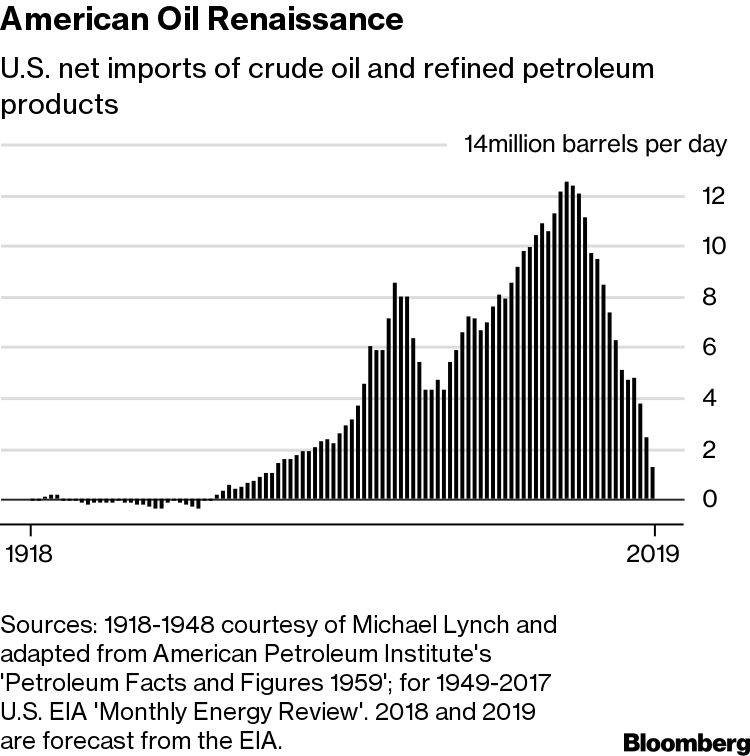
In less than a decade, U.S. companies have drilled 114,000 wells. Many of them would turn a profit even with crude prices as low as $30 a barrel.

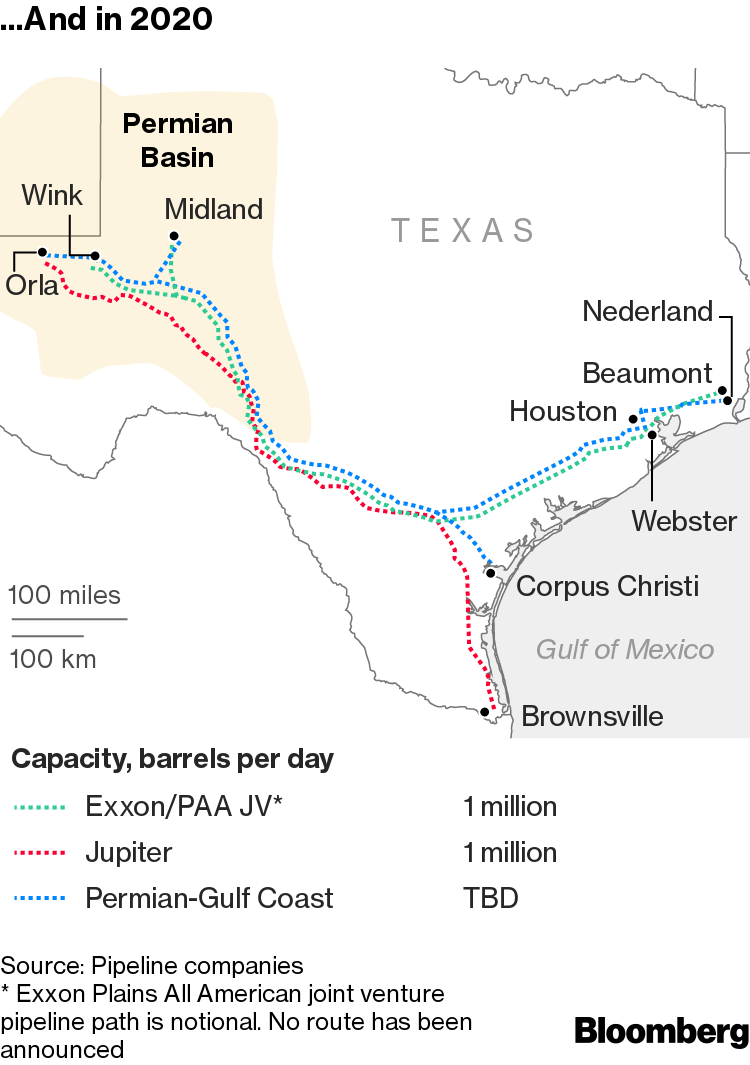
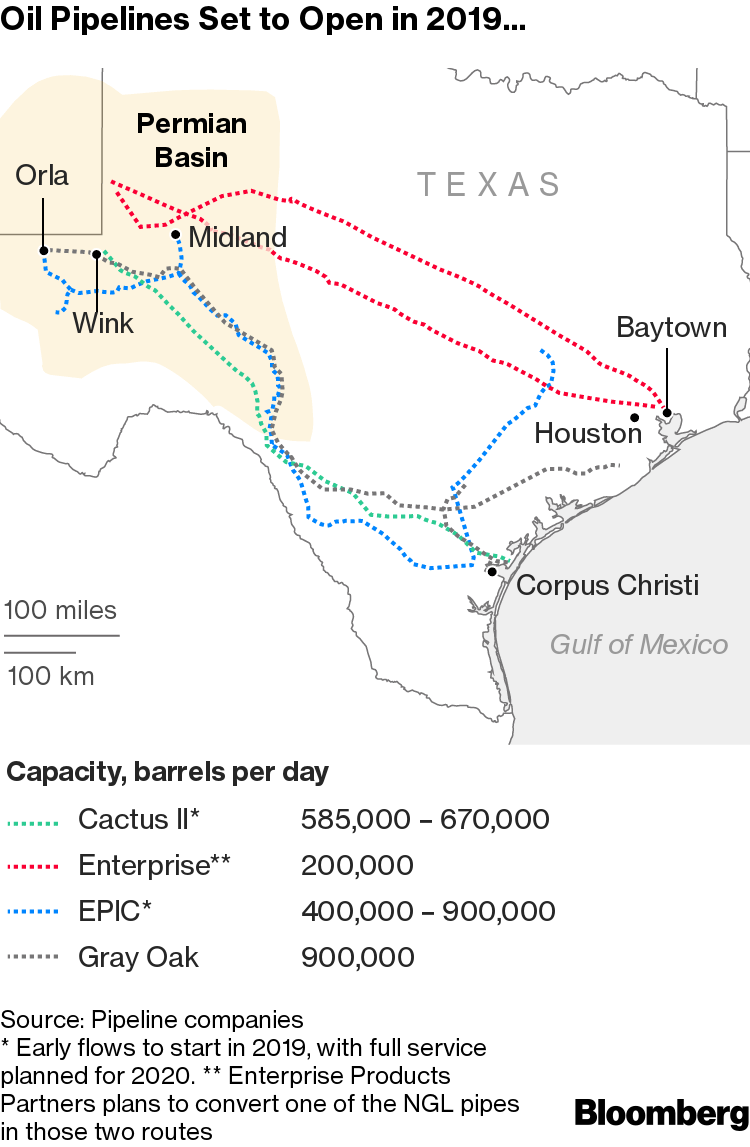
OPEC's bad dream only deepens next year, when Permian producers expect to iron out distribution snags that will add three pipelines and as much as 2 million barrels of oil a day.

"The Permian will continue to grow and OPEC needs to learn to live with it,'' said Mike Loya, the top executive in the Americas for Vitol Group, the world's largest independent oil-trading house.

The U.S. energy surge presents OPEC with one of the biggest challenges of its 60-year history. If Saudi Arabia and its allies cut production to keep prices higher, shale will thriverobbing them of market share. But because the Saudis need higher crude prices to make money than U.S. producers, OPEC can't afford to let prices fall.

Cartel Squeezed

So the cartel finds itself squeezed between the-sky's-the-limit U.S. output and softer demand growth. The 15 members, and allies including Russia, Mexico and Kazakhstan, will discuss the possibility of their second retreat from booming American production in three years when they gather Dec. 6 in Vienna.

OPEC helped create the monster that haunts its sleep. After it flooded the market in 2014, oil prices crashed, forcing surviving U.S. shale producers to get leaner so they could thrive even with lower oil prices. As prices recovered, so did drilling.

...

Price Tumble

"You've got an awful lot of production that can come in very economically,'' said Patricia Yarrington, Chevron Corp.'s chief financial officer. "If you think back four or five years ago, when we didn't really understand what shale could do, the marginal barrel was priced much higher than what we think the marginal barrel is priced today.''

That shift makes shale resilient to a price tumble. After touching a four-year high in October, West Texas Intermediate, the U.S. benchmark, has fallen by more than 20 percent.

Only a few months ago, the consensus was that the Permian and U.S. oil production more widely was going to hit a plateau this past summer. It would flat-line through the rest of this year and 2019 due to pipeline constraints, only to start growing again -- perhaps -- in early 2020.

If that had happened, Saudi Arabia would've had an easier job, most likely avoiding output cuts next year because production losses in Venezuela and sanctions on Iran would have done the trick.

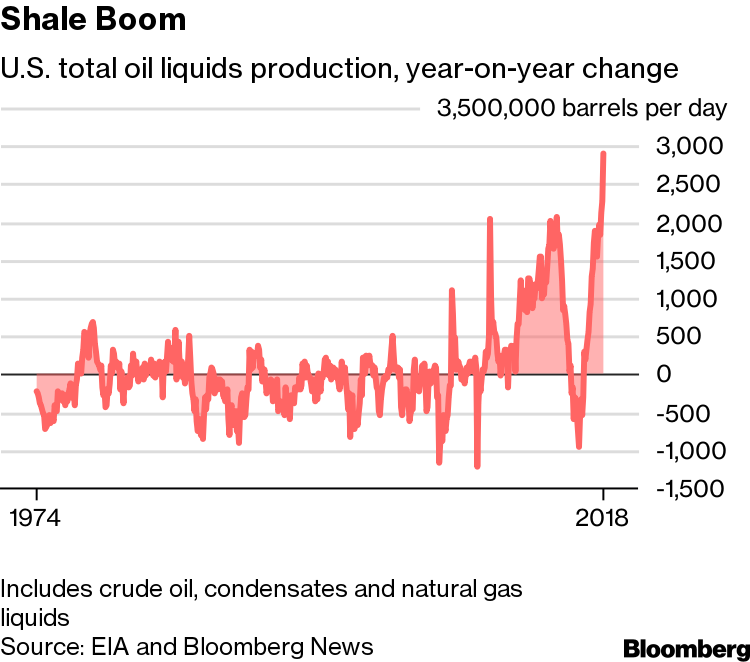
Instead, August saw the largest annual increase in U.S. oil production in 98 years, according to government data. The American energy industry added, in crude and other oil liquids, nearly 3 million barrels, roughly the equivalent of what Kuwait pumps, than it did in the same month last year. Total output of 15.9 million barrels a day was more than Russia or Saudi Arabia.


Read the rest of the story here: https://www.bloomberg.com/amp/news/articles/2018-11-21/opec-s-worst-nightmare-the-permian-is-about-to-pump-a-lot-more?


ShareThis

MasterEnergy News