Search This Blog

Tuesday, March 12, 2019

#Venezuela: #PDVSA's main #oil export terminal & heavy crude processing complex shut down as historic #blackout persists


Venezuelan oil operations halted, blackout persists

Argus Media
Venezuela's main oil export terminal and heavy crude processing complex in Jose are shut down as a historic blackout persists across much of the country today.
Crude exports were already backed up because of US oil sanctions before the record power outage darkened nearly all of Venezuela on 7 March. Around 14mn bl of crude are backed up in tankers anchored offshore.
Three heavy crude upgraders and a blending operation that national oil company PdV operates with foreign minority partners, as well as petrochemical plants run by Pequiven in Jose, are suspended, PdV officials tell Argus.
The halted upgraders are PetroPiar with Chevron, PetroMonagas with Russia´s Rosneft and PetroCedeño with Total and Equinor. The three plants have nameplate synthetic crude production capacity of around 450,000 b/d.
Also affected is the 160,000 b/d blending facility Sinovensa that PdV runs with China´s CNPC.
Other oil and gas operations are suspended as a precaution.
PdV has been working since yesterday to restore the Barbacoa-Jose power transmission line that services the strategic industrial complex in Anzoátegui state, but multiple tests failed yesterday. The company is testing the line again today after cleaning the Jose substation.
The blackout originated in the 10GW Guri hydroelectric complex and a 765kW transmission line that supplies central Venezuela. Thermoelectric plants that would have compensated for Guri´s breakdown are mostly out of service for lack of investment and maintenance.
Electricity service is returning in some parts of Caracas and other areas of the country today, but many Venezuelans have been without power and associated water supply for more than 70 hours. Looting and intimidation by paramilitary gangs were reported overnight. Among the areas that have power is the neighborhood around the 190,000 b/d Puerto La Cruz refinery.
Venezuela´s main airport in Maiquetía is mostly shut down.
Venezuela's president Nicolas Maduro and senior government officials have said the blackout was caused by a cyberattack perpetrated by the US. Critics say such an attack is impossible.
Juan Guaidó, the opposition leader that most Western countries recognize as interim president, called the blackout a long-foreseen "catastrophe" that will require international help to address problems across generation plants, transmission lines and substations after years of corruption.
Speaking across a halting internet signal from outside the National Assembly that he presides over, Guaidó said lawmakers will meet in an emergency session tomorrow to declare a "state of national alarm" and blamed Maduro for the crisis. "We need to address this catastrophe immediately," he said, urging Venezuelans to sustain anti-government protests.
"You have every right to be very angry, but now is the time to take action," he told supporters. "We all know who is responsible and we need to find solutions. We need to take action together in the street."
Some of Guaidó´s supporters are urging him to invoke Article 187 of Venezuela´s 1999 constitution that allows the assembly to authorize military intervention from abroad. Yesterday Guaidó said the opposition should be prepared to invoke Article 187 "when the time comes."
The US and allies in Latin America have pledged to support a political transition but rule out armed intervention.
Guaidó said 17 people have died as a result of the blackout, including 15 patients in a hospital in Maturin in eastern Venezuela. Julio Castro, a physician accompanying Guaidó today, said many others are at risk, including newborns, diabetics and dialysis patients.
The lack of water is also raising alarm bells over the further spread of diseases such as malaria and dengue.


Monday, March 11, 2019

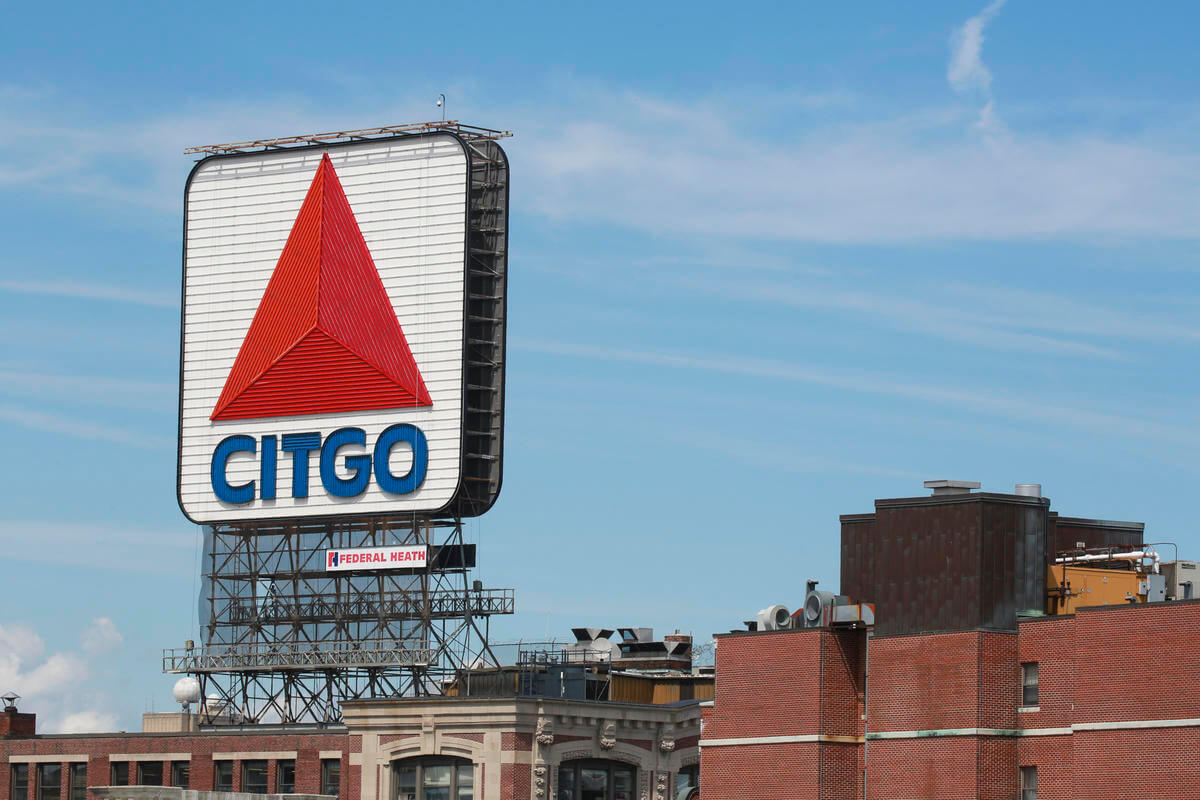
#Citgo looking for $1.2BN to fund daily operations as US #sanctions cripple parent, #Venezuela's #PDVSA #OOTT


Related image
Citgo Petroleum Corp. is looking to get a $1.2 billion loan to fund its daily operations as U.S. sanctions cripple its parent company, state oil giant Petroleos de Venezuela SA.

The Houston-based refiner hired Houlihan Lokey to find lenders to help it refinance bank credit lines maturing this year, a slide deck seen by Bloomberg shows. The deal launched this week and is expected to close on March 22, according to the presentation, which was given to investors by Curtis Rowe, Citgo’s vice president of finance.

The five-year term loan B may pay a coupon of between 4.5 and 5.5 percentage points above the Libor rate and could be issued at 99 cents on the dollar, according to the presentation. Proceeds will be used for "general working capital requirements" and to "provide ongoing liquidity,” the slides show.

The new loan would replace a $900 million secured revolver and a $320 million accounts receivable facility, according to the presentation. Deutsche Bank AG was the lead arranger of the revolver, issued in 2014 alongside Citgo’s existing term loan, which matures in 2021. The German lender and other banks involved in that financing have been reluctant to roll over their exposure, leading Citgo to consider other options, people with knowledge of the matter said.

See the whole story here:  https://www.bloomberg.com/news/articles/2019-03-08/citgo-eyes-1-2-billion-loan-amid-battle-for-control-of-refiner

Sunday, February 10, 2019

#Venezuela’s #PDVSA Scrambles to Survive U.S. #Oil #Sanctions #OOTT

No Sleep, Frantic Calls: Maduro's Oil Team Scrambles to Survive U.S. Ban

Food Shortages Hit Oil Industry Productivity

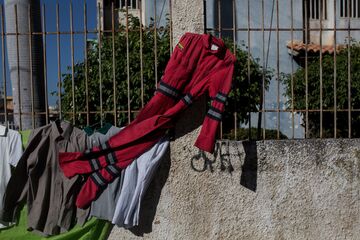
A PDVSA uniform hangs at a market in Puerto Cruz, Venezuela.

Photographer: Wil Riera/Bloomberg

By choking off the Maduro regime's finances, the Trump administration hopes to convince Venezuela's military brass to abandon the autocratic leader and accelerate his exit. But the tack comes with great risk: The oil industry is essentially Venezuela's lone source of hard currency, and the sanctions could wind up exacerbating the humanitarian crisis in the country.

PDVSA employees are also working furiously to entice vendors to sell them refined products such as naphtha that are critical to keeping its ailing industry working. As the supply of those products falls under the sanctions, early signs of a gasoline shortage have surfaced in the countryside.

An exodus of PDVSA employees in key areas such as commerce and supply has only added to the confusion, according to the people. PDVSA has even reached out to ex-employees to ask them for traders' phone numbers. The lack of experienced employees has complicated what would be in normal circumstances a fairly straightforward job making deals with traders to buy shipments of oil that equal less than half of one percent of the global market. (The U.S. typically purchased 400,000 barrels a day from Venezuela.) At the same time, the sanctions have narrowed options for making and receiving payments.

#Venezuela oil exports have sliced to a 10-month low. Last year, Venezuela loaded one vessel a day for U.S. refiners. After the U.S. ratcheted up sanctions on Jan. 28, only one vessel has loaded over a 10-day period. That has turned oil tankers into floating storage facilities.

There are about 8.28 million barrels of Venezuelan crude idling all over the Gulf of Mexico in an area that stretches from U.S. coast to the Yucatan Peninsula in Mexico, according to cargo-tracking and market intelligence company Kpler. 

...

But with the U.S. supply cut off, the country may be getting close to running out of gasoline. In some of PDVSA's fuel stock facilities, inventories have been drained down to as little as just one day, according to a company document dated Feb. 6 that was seen by Bloomberg News.

Read the article online here:

No Sleep, Frantic Calls: Maduro's Oil Team Scrambles to Survive U.S. Ban

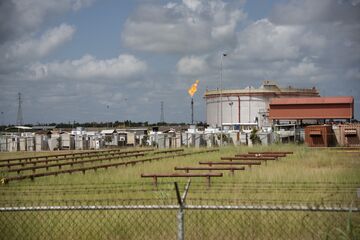
An oil storage tank stands at the PDVSA El Tigre facility in Venezuela.

An oil storage tank stands at the PDVSA El Tigre facility in Venezuela.

Photographer: Bloomberg

At Venezuela's state oil company, desperation and chaos are setting in one week after the U.S. imposed a de facto ban on the country's crude products.

https://www.bloomberg.com/amp/news/articles/2019-02-08/no-sleep-frantic-calls-pdvsa-scrambles-to-survive-u-s-oil-ban?

Bit.ly/MasterEnergyBlog


ShareThis

MasterEnergy News