Search This Blog

Showing posts with label Sanctions. Show all posts

Monday, October 27, 2025

New Russian Oil Co. Sanctions

On Wednesday night, the US Department of the Treasury's Office of Foreign Assets Control hit Russia's two largest oil exporters, Rosneft PJSC and Lukoil PJSC, with sanctions. The move raises the stakes for buyers of their barrels, principally refiners in ChinaIndia and Turkey.

Rosneft PJSC and Lukoil PJSC, together with Surgutneftegas PJSC and Gazprom Neft PJSC, blacklisted in Januaryaccounted for almost 70% of Russia's crude exports — around 3.1 million barrels a day — in the first half of the year.

If just half the Russian barrels covered by sanctions are curtailed, that could push the global oil market next year from a surplus of 700,000 barrels a day into a deficit, according to Bloomberg calculations using forecasts from the Organization of the Petroleum Exporting Countries. 

Monday, March 14, 2022

#Biden ❤️ #Venezuela's #Oil


#Sanctions on #Russia have led the US to start a rapprochement with #Venezuela's Maduro

Mary Anastasia O’Grady says it well in the Wall Street Journal:

This would be a good time to make life more difficult for Mr. Maduro. Instead the Biden delegation’s visit to Caracas bestowed upon him much-craved legitimacy.”

You’d think that woke American corporations and Wall Street would be embarrassed to be seen doing business with gangsters

“Venezuela’s state-owned oil company, PdVSA, is an environmental wrecking ball. Satellite images of Lake Maracaibo show the complete devastation the company has caused. Similar degradation has occurred in the Amazonas and Orinoco regions, where the Maduro regime collaborates with criminal groups engaged in mining that trashes the environment.

“On human rights, Caracas’s record of imprisonment, torture and extrajudicial killings is chilling. Some five million Venezuelans have fled the country. Those who remain suffer unimaginable privation, often without running water or adequate nutrition for their children.”

And yet the administration seeks engagement with Maduro’s criminal regime…

Tuesday, March 23, 2021

#Oil Executives Weigh Return to #Venezuela

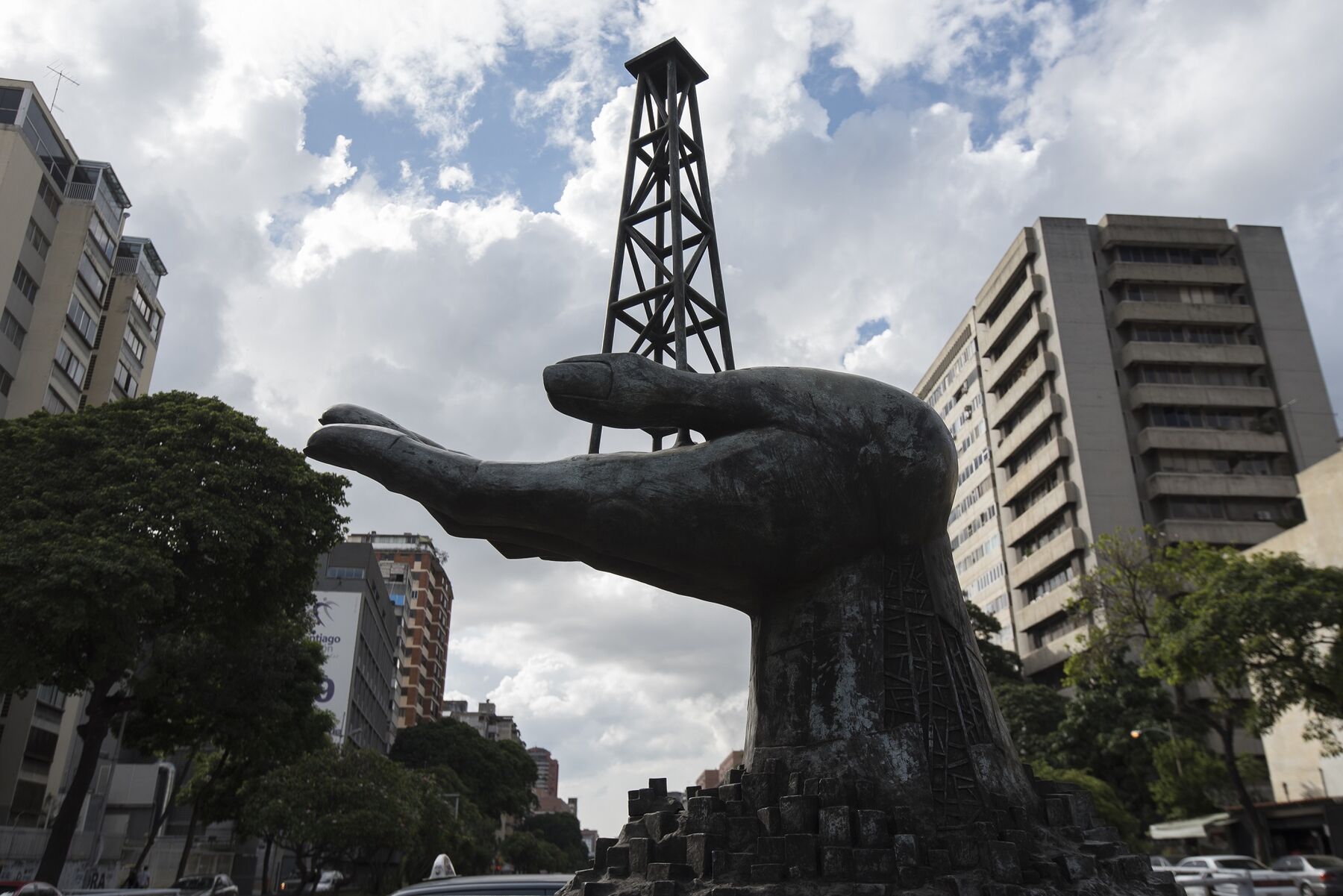
A sculpture outside of the Petroleos de Venezuela SA headquarters in Caracas.

Promises of more autonomy to tap the world’s biggest crude reserves are drawing the oil industry to meetings with the Nicolas Maduro regime.

Whether Maduro will succeed in luring some investment is still unclear. But one thing is certain: Oil companies have never had such leverage with him to negotiate a piece of the country’s more than 300 billion barrels of crude

Maduro’s government says his new energy law alone will allow oil companies to get back in business as they assume control of Venezuelan assets. That’s because the U.S. only bans doing business with PDVSA, the regime and those who help it.  Oil ventures run by independent oil companies, in theory, wouldn’t be barred from developing crude reserves in the country. 

Major oil companies would probably wait for sanctions to be lifted regardless, but others could jump in as soon as they can claim they’re operating independently from PDVSA and Maduro’s regime, and therefore not subject to sanctions

At a Hotel in Caracas, Oil Executives Weigh a Return to Venezuela


19 March 2021, 12:00 CET Updated on 19 March 2021, 17:03 CETA 

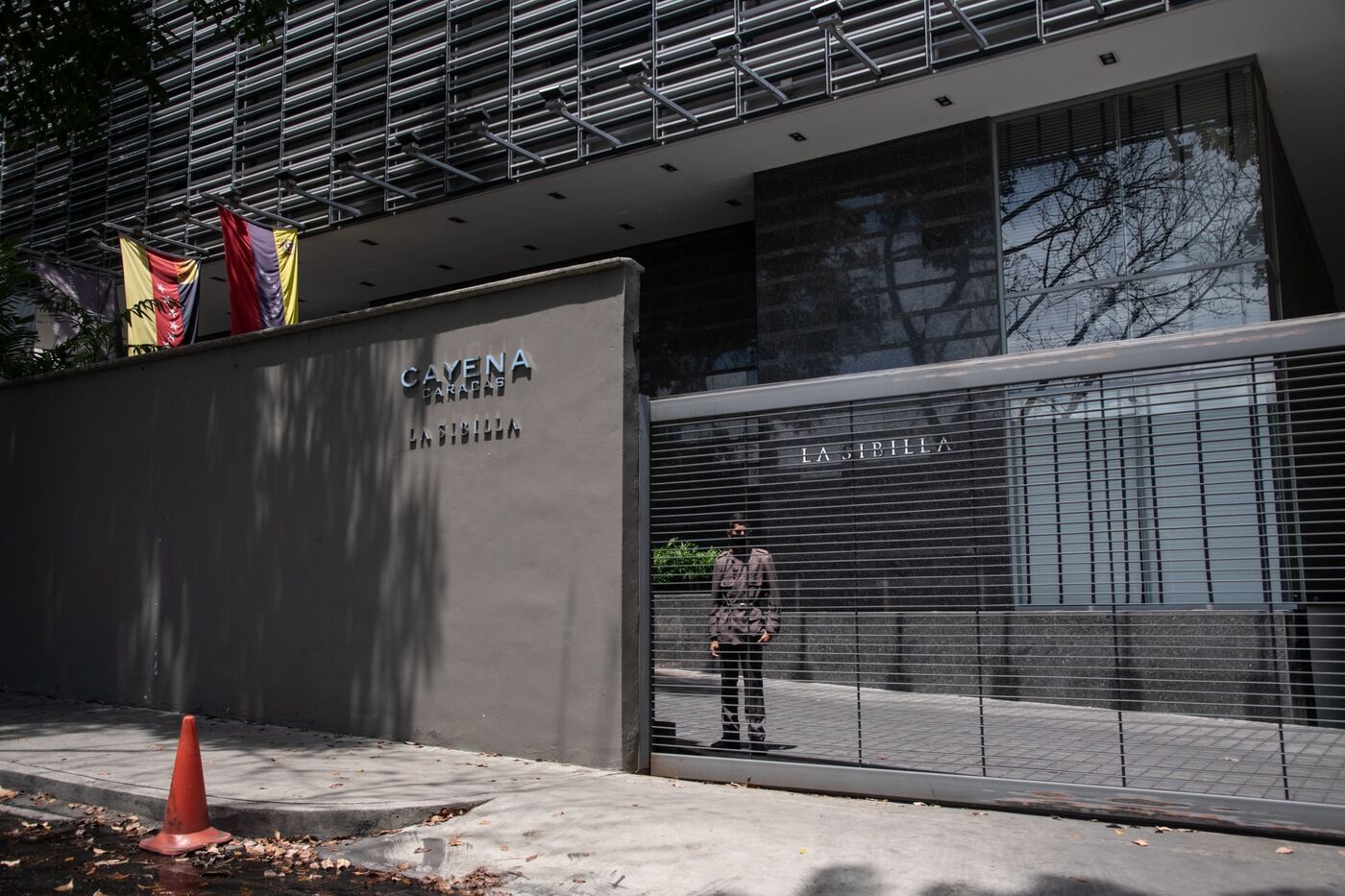
Inside a chic lounge, oil lobbyists and executives rub shoulders as Spanish, French and Italian can be heard in the halls. This isn’t the ZaZa boutique hotel in Houston, where global energy top brass like to stay. It’s the Cayena Hotel in the Venezuelan capital of Caracas.

Drawn by promises of privatization and more autonomy to tap the world’s biggest crude reserves, they’re meeting with the Nicolas Maduro regime and state-owned Petroleos de Venezuela SA to best position themselves when doing business there is possible again. Bigger producers like Chevron Corp., France’s Total SE and Italy’s Eni SpA would probably wait until U.S. sanctions are lifted, but smaller players might get started whenever new rules opening up the industry for private enterprise take effect.

“I want to tell investors from the U.S. and around the world that Venezuela’s doors are open for oil investment,” Maduro said in a recent televised address.
The Cayena Hotel in the La Castellana neighborhood of Caracas.Photographer: Carolina Cabral Fernandez/Bloomberg

It’s a make-or-break moment for an impoverished nation that’s running out of fuel to haul food and cash to pay for imports of basic necessities. Whether Maduro will succeed in luring some investment is still unclear. But one thing is certain: Oil companies have never had such leverage with him to negotiate a piece of the country’s more than 300 billion barrels of crude.

“There is some easy potential to increase production if sanctions enforcement declines,” said Francisco Monaldi, a Venezuelan-American lecturer in energy economics at Rice University’s Baker Institute for Public Policy, and an expert on Venezuela’s oil industry. “After that, you need significant investments.”

The successor of the late Hugo Chavez, who infamously seized assets from Exxon Mobil Corp. and ConocoPhillips, is promising to pass a law that will officially end an oil monopoly in the hands of PDVSA, as the country’s ruined oil cash cow is known.

Executives representing oil companies are holding meetings to discuss what the terms would be under the new legislation, according to people with knowledge of the talks, who asked not to be named because they’re not authorized to comment on them in public.

Chevron, for one, is even getting in touch with contractors to assess how fast they could help the San Ramon, California-based company restart operations in the South American nation, one person said.

“Chevron will continue to comply with applicable laws and regulations in relation to the activities that it is authorized to undertake in Venezuela,” a spokesperson for the company said. “We remain committed to the integrity of our joint venture assets, the safety and wellbeing of our employees and their families, and the company’s social and humanitarian programs during these challenging times.”

Total didn’t return requests for comment, as didn’t Maduro’s Information Ministry, the Oil Ministry and PDVSA. Eni said none of its executives visited Caracas.

Maduro’s government says his new energy law alone will allow oil companies to get back in business as they assume control of Venezuelan assets. That’s because the U.S. only bans doing business with PDVSA, the regime and those who help it. Oil ventures run by independent oil companies, in theory, wouldn’t be barred from developing crude reserves in the country.
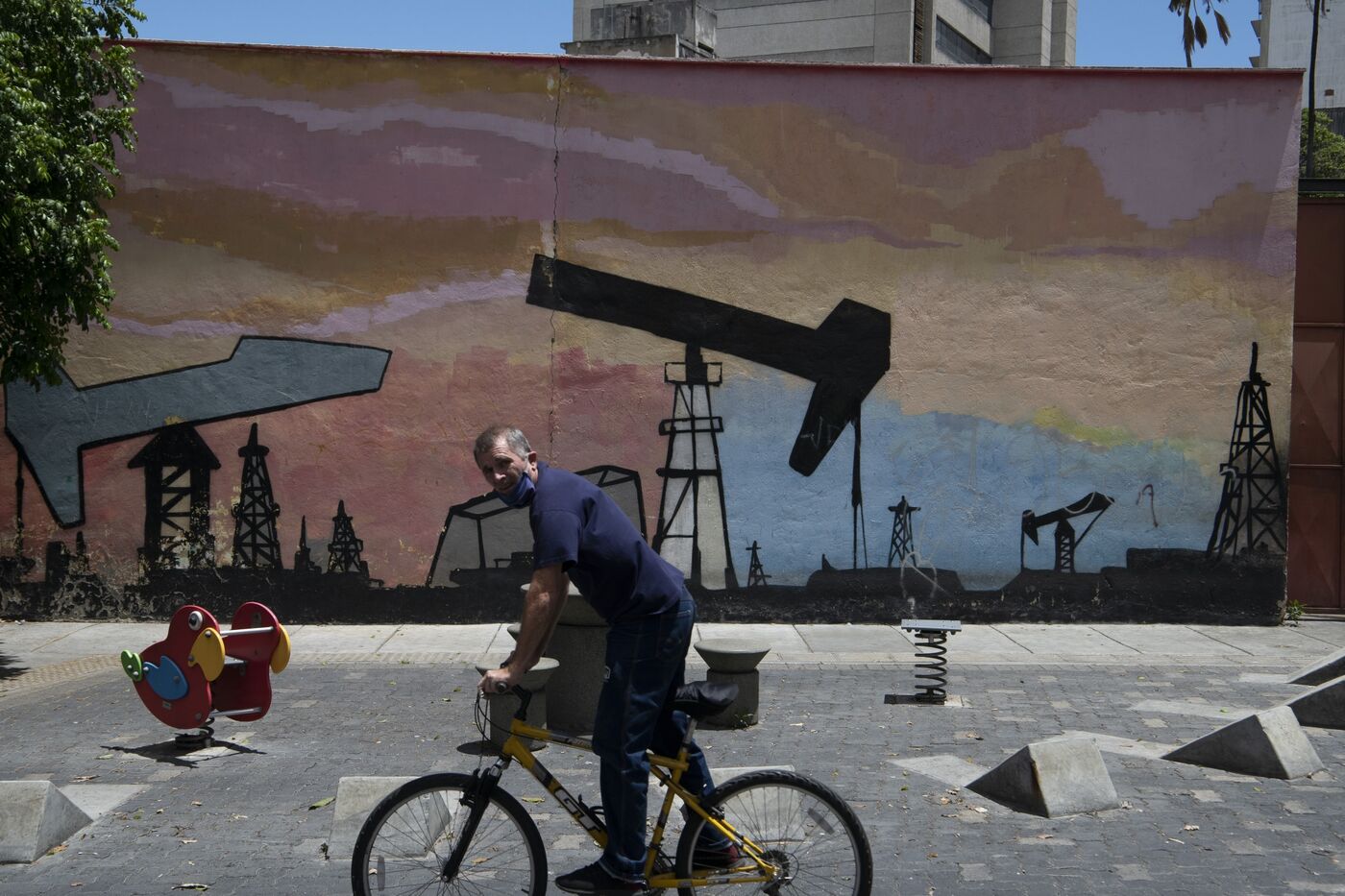
A cyclist rides past a mural of oil pump jacks on the Boulevard de Sabana Grande in Caracas.Photographer: Carlos Becerra/Bloomberg

Major oil companies would probably wait for sanctions to be lifted regardless, but others could jump in as soon as they can claim they’re operating independently from PDVSA and Maduro’s regime, and therefore not subject to sanctions.

There are people close to the government “eager to get some oil fields; I would expect there to be some privatizations,” Monaldi said. “They will try to invest in the wells that are the easiest to connect.”

Wilmer Ruperti, a Venezuelan-born shipping magnate, is among less-known entrepreneurs who have sought to do business with PDVSA in the past despite sanctions. Ruperti didn’t reply to requests for comment on potential investments under the proposed new rules.

Restoring Venezuela’s oil industry back to its former glory would likely take tens of billions of dollars, and that might never happen, but any business activity would help the country.

Once a prosperous OPEC-founding member that produced more than 3 million barrels a day of crude, the nation is now pumping less than half a million.

Oil Minister Tareck El Aissami recently vowed to boost production to 1.5 million this year, and that would be difficult to achieve without help. Monaldi estimates more than $100 billion and a decade of work would be required to get output past 2 million barrels a day.

“This means you need a ton of private investment,” he said.

An increase in oil output would not only buoy the economy but also raise capital to ultimately pay off creditors holding roughly $60 billion of defaulted obligations.

So, executives from the oil industry and capital markets have also been pleading their case to officials in Washington, people familiar with those discussions said. Their message: If others are going to play ball, let’s get in on the action, too.

“The big question is if the oil companies have enough political clout for an easing in sanctions,” said Raul Gallegos, a Bogota-based director at Control Risks, an international consulting firm. “They are interested in the flexibility that Maduro is offering.”

The U.S. Treasury’s Office of Foreign Assets Control, which enforces the sanctions, didn’t immediately reply to requests for comment.

With bigger issues to tackle, from the coronavirus to tension with Russia and trade with China, U.S. President Joe Biden’s administration hasn’t yet made a significant pivot from President Donald Trump’s strategy on Venezuela. The U.S. government officially recognizes opposition leader Juan Guaido as Venezuela’s interim president until there’s a free and fair election.

If the new U.S. government at least moves to let companies resume swaps of diesel for Venezuelan crude, that would help the country avert collapse. The fuel is needed for trucks to take imported food, medicines and other products from ports to cities, as well as to haul goods from farms and factories.

``The onus is on the U.S. to decide if sanctions make sense going forward,'' Gallegos said.

Without investments in the country’s crumbling energy infrastructure, though, that would be just a stopgap solution.

— With assistance by Peter Millard, Patricia Laya, Francois De Beaupuy, and Kevin Crowley
(Adds comment from analyst in penultimate paragraph.)

Friday, June 26, 2020

US #Sanctions on #Venezuela has left 18MM Barrels Of #Oil Stranded Out At Sea

Estimates based on shipping data, industry sources, and documents of Venezuela's state oil firm PDVSA, show at least 16 tankers with 18 Million Barrels of Oil are idling off the coasts of Africa and Southeast Asia because few potential buyers would risk U.S. sanctions for dealing with the regime of Nicolas Maduro.


________________________

Saturday, February 22, 2020

#PDVSA prepares fuel rationing program as US #sanctions hamper imports


PDVSA prepares fuel rationing program as US sanctions hamper imports: sources | S&P Global Platts
PDVSA prepares fuel rationing program as US sanctions hamper imports: sources


Caracas, Venezuela — Venezuela's PDVSA is preparing a fuel rationing plan for domestic consumers as the state-owned company confronts a shortfall of refined products and the consequences of US sanctions on production and trading activities, according to sources.
Staring at a 58% shortfall in gasoline and a 71% shortfall in diesel and as US sanctions bite increasingly harder, PDVSA is preparing a rationing plan that could take effect in the next few weeks, according to sources and local media reports.
"The supply of strategic fuels to the national market is the priority at the moment," according to a PDVSA official who spoke with S&P Global Platts on the condition of anonymity.
"In February and March, we expect local demand for 95 and 91 octane gasoline will be 217,000 b/d and diesel consumption to average 110,000 b/d," the official said.
Preliminary PDVSA figures reviewed by Platts indicate average gasoline production for the whole of 2019 was 72,000 b/d, while consumption averaged 142,000 b/d. Imports averaging 70,000 b/d made up the difference.

Sunday, February 16, 2020

#PDVSA having hard time finding buyers for 80% of February crude #Oil production

PDVSA having hard time finding buyers for 677,000 b/d of February crude | S&P Global Platts
"For February, there is 661,000 b/d of crude that has no takers. Also, PVDSA is offering to pay debts with crude to creditors but there are no interested parties," the official added.
PDVSA has offered deep price discounts for its crude, and flexible loading windows of more than 30 days  ...
The volume available for sale represents 80% of the 850,000 b/d total crude production estimated by PDVSA for February  


Highlights


Caracas, Venezuela — Venezuela's state owned PDVSA has 677,000 b/d of crude available to sell for February, but no buyers because of US sanctions, according to a company official.
"The climbing of US sanctions against the Nicolas Maduro government alienated the few clients that were still daring to enter Venezuelan ports," said a PDVSA official, who spoke on condition of anonymity.
"For February, there is 661,000 b/d of crude that has no takers. Also, PVDSA is offering to pay debts with crude to creditors but there are no interested parties," the official added.

Sunday, February 9, 2020

In bid to Survive, #Venezuela’s Maduro Gives Up @PDVSA’s Control Over #Oil

To Survive, Venezuela's Leader Gives Up Decades of Control Over Oil - The New York Times
  • Chevron is the biggest producer with 160,000 bopd. 
  • Pdvsa's biggest ally has been Russia's Rosneft, which over the past year has grown to sell about two-thirds of Venezuela's oil. Rosneft has quickly replaced Pdvsa's American sales routes by diverting its oil to Asia, often obscuring the cargo's source and destination to bypass sanctions


To Survive, Venezuela's Leader Gives Up Decades of Control Over Oil


Faced with a severe economic crisis, the country's leader, Nicolás Maduro, is letting foreign firms take over daily operations of its oil fields. It's a break with core tenets of his socialist revolution.

Adriana Loureiro Fernandez for The New York Times

CARACAS, Venezuela — After decades of dominating its oil industry, the Venezuelan government is quietly surrendering control to foreign companies in a desperate bid to keep the economy afloat and hold on to power.
The opening is a startling reversal for Venezuela, breaking decades of state command over its crude reserves, the world's biggest.
The government's power and legitimacy has always rested on its ability to control its oil fields — the backbone of the country's economy — and use their profits for the benefit of its people.
But the nation's authoritarian leader, Nicolás Maduro, in his struggle to retain his grip over a country in its seventh year of a crippling economic crisis, is giving up policies that once were central to its socialist-inspired revolution.
Under Venezuelan law, the state-run oil company must be the principal stakeholder in all major oil projects. But as that company, Petróleos de Venezuela, or Pdvsa, unravels — under the weight of American sanctions, years of gross mismanagement and corruption — the work is unofficially being picked up by its foreign partners.
Private companies are pumping crude, arranging exports, paying workers, buying equipment and even hiring security squads to protect their operations in a collapsing countryside, according to managers and oil consultants working on the country's energy projects.
In effect, a stealth privatization is taking place, said Rafael Ramírez, who ran Venezuela's oil industry for more than a decade before breaking with Mr. Maduro in 2017, in a video address this week.
"Today, Pdvsa doesn't manage our oil industry, Venezuelans don't manage it," said Mr. Ramírez. "In the middle of the chaos generated by the worst economic crisis suffered by the country in its history, Maduro is taking actions to cede, transfer and hand over oil operations to private capital."
Pdvsa did not respond to requests for comment on its recent concessions to private partners.

Meridith Kohut for The New York Times
The haphazard changes to the oil sector, which have accelerated in recent months, are remaking the oil industry in a nation whose assertive energy policies had, since the 1950s, served as an example to developing countries of how to take control of natural resources.
And they are a stark retreat from the vision of Hugo Chávez, who was Mr. Maduro's mentor and predecessor. Mr. Chávez nationalized in 2007 the giant holdings of Exxon Mobil and ConocoPhillips and packed Pdvsa's leadership ranks with political allies dedicated to his socialist-inspired "Bolivarian revolution."
But Mr. Maduro's transformation of Venezuela's oil industry has stemmed the collapse triggered by an American embargo. Sanctions imposed in January 2019 had wiped out about a third of Venezuela's oil production, bringing it down at one point to the lowest level since the 1940s, according to data from the Organization of the Petroleum Exporting Countries.
Oil production now is still less than a third of the total in 1998, when Mr. Chávez took power. By late 2019, Venezuela had stabilized exports at about a million barrels per day, according to Bloomberg's tanker tracking data.
The dribble of oil exports has provided Mr. Maduro with foreign revenue at the most critical moment of the country's economic crisis, allowing him to adjust to sanctions and consolidate his rule.

Thursday, May 2, 2019

Don’t Blame Washington’s #Sanctions for #Venezuela’s #Oil Woes

Don't Blame Washington for Venezuela's Oil Woes: A Rebuttal | Americas Quarterly

A Rebuttal to Economists Mark Weisbrot, co-director of the Center for Economic and Policy Research, and Jeffrey Sachs who conclude​ ​that Washington 's recent sanctions caused the current collapse and human suffering in Venezuela. 

Don't Blame Washington for Venezuela's Oil Woes: A Rebuttal

On August 2017, the White House imposed financial sanctions on Venezuela, limiting its access to U.S. financial markets. Shortly after, Venezuela's economy and oil sector collapsed. ​Economists Mark Weisbrot, co-director of the Center for Economic and Policy Research, and Jeffrey Sachs conclude​ ​that the sanctions caused the collapse and human suffering that followed. Is this persuasive? 

In short, no. 

To make their point, Weisbrot and Sachs take Colombia as a counterfactual for Venezuela. Then, they claim that Colombia and Venezuela's oil production trends were similar before sanctions and diverged after the sanctions were imposed, when Venezuela's production declined much further. Hence, they reason, the sanctions must have caused Venezuela's added decline. Their evidence is in Figure 1 below. 

Figure 1: Weisbrot and Sachs' Main Evidence

Sources: OPEC (2019), OPEC Secondary Sources; US Energy Information Administration (2018). Adapted from Rodríguez (2018).

Is Colombia a good counterfactual for Venezuela, though? Not by a mile. Firstly, the oil production trends were ​anything but similar in the decade before sanctions. In fact, Colombia had an oil boom in the 2000s that was partly fueled by the 20,000 Venezuelan oil professionals that Chávez fired from PDVSA in 2003, which caused Venezuela's production to plummet. The trends can only be made to look "similar" before sanctions by conveniently re-scaling the axes and only looking at data from 2013 onwards. 

Figure 2: Oil Production in Colombia and Venezuela (kbpd) 

Sources: EIA, OPEC (secondary sources), own calculations

Secondly, the two countries are radically different in other dimensions. Colombia has had pro-market oil policies since the 2000s and has done well in recent years. In contrast, Venezuela has been a slow-motion train-wreck. Over the last decade, its democratic institutions have been hollowed out, the rule of law has vanished, and deepening economic distortions have resulted in an unprecedented humanitarian crisis and economic depression.

Thirdly, just a month after the financial sanctions in late 2017, Nicolas Maduro fired both the relatively technocratic PDVSA president and oil minister and replaced them with a single military general with no experience in oil​. The new CEO fired and imprisoned over 60 senior managers of the oil company including its previous president on corruption charges. Nothing remotely similar happened in Colombia, thus confounding the effects of the sanctions with those of the firing, which again makes it a bad counterfactual for Venezuela.  

Fourthly, Colombia has mostly heavy oil, which makes its production sensitive to low oil prices. According to Weisbrot and Sachs, this is what makes it a good counterfactual for Venezuela. But Venezuela has a mix of light, medium and heavy crudes. Furthermore, Venezuela's heavy crude production (run by joint ventures with foreign oil companies) has been relatively resilient. What's collapsed disproportionately is the production of light and medium crudes, which are under direct PDVSA control. Hence the alleged similarity in the 2015 output decline is not related to heavy-oil, as Weisbrot and Sachs argue. Lastly, Colombia has very little oil left underground, barely 1.7 billion barrels, while Venezuela has over 300 billion barrels, the world's largest oil reserves.  

For all of these reasons, taking what happened in Colombia since 2017 as a counterfactual for what would have happened in Venezuela if there had been no financial sanctions makes no sense. 

If instead we compare Venezuela to the rest of OPEC, a set of countries with typically large reserves more similar to Venezuela, a clear picture emerges. While Venezuela's production fluctuated around 10% of OPEC before Chavez took over in 1999, it started a sustained decline thereafter (Figure 3), almost two decades before the sanctions, courtesy of policies that included the afore mentioned firing of 20,000 employees, the repeated expropriation of oil production and service companies, the diversion of its borrowing to non-oil activities and gross mismanagement and corruption. 

Figure 3: Share of Venezuela's Oil Production in OPEC (% of total)

Sources: EIA, OPEC (secondary sources), own calculations 

Weisbrot and Sachs also attribute rising mortality rates in 2017-2018 and the 40,000 associated deaths to the financial sanctions. This is even less serious. How do they rule out that mortality rates wouldn't have continued rising without sanctions? How do they rule out that it wasn't the collapse in the importation of food and medicine that pre-dated the sanctions that increased death rates? Or Venezuelan doctors leaving the country? Or government indolence and corruption? Weisbrot and Sachs don't rule out or address any alternative explanations.  

But there's more that's wrong with the Weisbrot and Sachs' article. They also write that the $7 billion in debt service that was due for PDVSA in the next two years "could have been postponed with the restructuring of the PDVSA debt that was being negotiated" at the time if it hadn't been for the financial sanctions. As a result of the sanctions, their article implies, the restructuring derailed and government had to slash imports of food and medicine to pay PDVSA's debt, which contributed to the humanitarian crisis. 

This reasoning is deeply flawed. First, when oil prices collapsed in 2014, many analysts, ​including us​, suggested that a debt restructuring was necessary and indeed desirable. But instead, the government persecuted those that sounded the alarms and instead opted to cut food and medicine imports, triggering the humanitarian crisis well in advance of the sanctions. Consequently, by the time sanctions were imposed, Venezuela had already slashed imports of food and medicine by more than 80% (Figure 4), triggering ​a humanitarian crisis that was anticipated as far back as December 2015​. Years before defaulting on bondholders, Maduro chose to default on Venezuelan stomachs.

Figure 4: Medicine Imports Collapse

Sources: Miguel Santos using data from the CID Atlas of Economic Complexity

Relatedly, Venezuela was already shut out of capital markets months before the August 2017 sanctions. Three months earlier, in May 2017, the country raised almost $900 million in cash by promising to pay $2.8 billion in five years with the sale of the infamous ​hunger bonds​. The implicit interest cost of the financing was 47%. Previously, in November 2016, it had attempted to place a greatly over-collateralized bond at a 22% yield to maturity but was unable to sell the whole issue.  

So, many months before the sanctions, capital markets had decided that it was too risky to lend money at anything other than an eye-gouging rate. The lack of market access had nothing to do with the financial sanctions, and the negotiations with bondholders (which were being run by a "​drug kingpin​") were almost certainly going nowhere. Markets did not believe that Maduro was willing or able to reverse Venezuela's decline.

 In January 2019, the U.S. government ​sanctioned PDVSA​, restricting the ability of U.S. persons from having any commercial or financial relationship with the company. The sanctions were followed by a precipitous decline in oil production. Again, can we straightforwardly attribute the decline to the sanctions? No. 

Most sanctions were to take effect on April 15 and yet oil production declined precipitously before that date. After all, Venezuela was able to skirt the sanctions by redirecting oil sales from the U.S. to India, China, and Russia. Instead, the national electric blackouts that recently paralyzed Venezuela are the main driver of the added decline. As seen in Figure 5, the collapse of oil production in March was fundamentally related to the two blackouts that occurred between March 7-11 and March 25-31. 

Figure 5: Daily Oil Production and Blackouts

Sources: IPD consulting

These recent blackouts were triggered by wildfires near key transmission lines — nobody had done the required maintenance to trim the overgrown vegetation. But the electric sector's collapse dates back to its nationalization in 2007 and the 2009 "electrical emergency" where the regime allocated over $50 billion to investments in the sector. A well-documented corruption orgy consumed most of the funds and generation capacity did not increase by a single gigawatt.

Perverse policies and extreme mismanagement explain the bulk of Venezuela's collapse. The financial sanctions have prevented the regime from further mortgaging the future of the country. They are a means to put pressure on the regime to negotiate the return to democracy and constitutional rule. Oil sanctions are designed to restrict their access to the resources with which to continue its oppression. Nobody disputes that they will adversely affect PDVSA going forward, but they have brought Venezuela closer than ever to regime change. 

It's understandable if the authors don't agree with the use of sanctions to pressure Venezuela's dictatorship. It is not understandable that they would misrepresent their effects with sloppy reasoning. 

--

Ricardo Hausmann is the director of Harvard University's Center for International Development (CID), economics professor at Harvard's Kennedy School and is an adviser to opposition leader Juan Guaidó. Frank Muci is a research fellow at the CID's Growth Lab. 

Monday, March 11, 2019

#Citgo looking for $1.2BN to fund daily operations as US #sanctions cripple parent, #Venezuela's #PDVSA #OOTT


Related image
Citgo Petroleum Corp. is looking to get a $1.2 billion loan to fund its daily operations as U.S. sanctions cripple its parent company, state oil giant Petroleos de Venezuela SA.

The Houston-based refiner hired Houlihan Lokey to find lenders to help it refinance bank credit lines maturing this year, a slide deck seen by Bloomberg shows. The deal launched this week and is expected to close on March 22, according to the presentation, which was given to investors by Curtis Rowe, Citgo’s vice president of finance.

The five-year term loan B may pay a coupon of between 4.5 and 5.5 percentage points above the Libor rate and could be issued at 99 cents on the dollar, according to the presentation. Proceeds will be used for "general working capital requirements" and to "provide ongoing liquidity,” the slides show.

The new loan would replace a $900 million secured revolver and a $320 million accounts receivable facility, according to the presentation. Deutsche Bank AG was the lead arranger of the revolver, issued in 2014 alongside Citgo’s existing term loan, which matures in 2021. The German lender and other banks involved in that financing have been reluctant to roll over their exposure, leading Citgo to consider other options, people with knowledge of the matter said.

See the whole story here:  https://www.bloomberg.com/news/articles/2019-03-08/citgo-eyes-1-2-billion-loan-amid-battle-for-control-of-refiner

Sunday, February 10, 2019

#Venezuela’s #PDVSA Scrambles to Survive U.S. #Oil #Sanctions #OOTT

No Sleep, Frantic Calls: Maduro's Oil Team Scrambles to Survive U.S. Ban

Food Shortages Hit Oil Industry Productivity

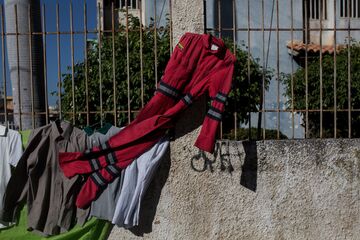
A PDVSA uniform hangs at a market in Puerto Cruz, Venezuela.

Photographer: Wil Riera/Bloomberg

By choking off the Maduro regime's finances, the Trump administration hopes to convince Venezuela's military brass to abandon the autocratic leader and accelerate his exit. But the tack comes with great risk: The oil industry is essentially Venezuela's lone source of hard currency, and the sanctions could wind up exacerbating the humanitarian crisis in the country.

PDVSA employees are also working furiously to entice vendors to sell them refined products such as naphtha that are critical to keeping its ailing industry working. As the supply of those products falls under the sanctions, early signs of a gasoline shortage have surfaced in the countryside.

An exodus of PDVSA employees in key areas such as commerce and supply has only added to the confusion, according to the people. PDVSA has even reached out to ex-employees to ask them for traders' phone numbers. The lack of experienced employees has complicated what would be in normal circumstances a fairly straightforward job making deals with traders to buy shipments of oil that equal less than half of one percent of the global market. (The U.S. typically purchased 400,000 barrels a day from Venezuela.) At the same time, the sanctions have narrowed options for making and receiving payments.

#Venezuela oil exports have sliced to a 10-month low. Last year, Venezuela loaded one vessel a day for U.S. refiners. After the U.S. ratcheted up sanctions on Jan. 28, only one vessel has loaded over a 10-day period. That has turned oil tankers into floating storage facilities.

There are about 8.28 million barrels of Venezuelan crude idling all over the Gulf of Mexico in an area that stretches from U.S. coast to the Yucatan Peninsula in Mexico, according to cargo-tracking and market intelligence company Kpler. 

...

But with the U.S. supply cut off, the country may be getting close to running out of gasoline. In some of PDVSA's fuel stock facilities, inventories have been drained down to as little as just one day, according to a company document dated Feb. 6 that was seen by Bloomberg News.

Read the article online here:

No Sleep, Frantic Calls: Maduro's Oil Team Scrambles to Survive U.S. Ban

An oil storage tank stands at the PDVSA El Tigre facility in Venezuela.

An oil storage tank stands at the PDVSA El Tigre facility in Venezuela.

Photographer: Bloomberg

At Venezuela's state oil company, desperation and chaos are setting in one week after the U.S. imposed a de facto ban on the country's crude products.

https://www.bloomberg.com/amp/news/articles/2019-02-08/no-sleep-frantic-calls-pdvsa-scrambles-to-survive-u-s-oil-ban?

Bit.ly/MasterEnergyBlog


ShareThis

MasterEnergy News